Iot Device Connectivity Analysis Review: Superior Insight
Ever wondered how tiny gadgets team up to make our world smarter? In 2024, billions of IoT devices are chatting with each other to help simplify our daily lives. This review digs into the numbers behind different connections, from fast Wi-Fi links to power-saving Bluetooth talks. We also take a look at trends showing how these devices work together to create smarter homes and businesses. Join us as we share insights about the tech and figures powering our connected world.
Comprehensive Evaluation of IoT Device Connectivity

In 2024, the world boasted about 18.5 billion IoT devices, a 12% jump from last year. Experts say we’ll see 21.1 billion by the end of 2025, 39 billion by 2030, and over 50 billion by 2035. Imagine thousands of tiny sensors working together, much like a smart building that adjusts its lights and temperature automatically. Every device plays a part in making our lives run a bit smoother.
When it comes to connections, each type has its own role. In 2024, Wi-Fi carried 32% of all links, Bluetooth made up 24%, and Cellular IoT contributed 22%. A speedy Wi-Fi connection powers data-heavy apps, while Bluetooth offers a low-energy, local chat between devices, perfect for busy industrial setups.
Industry use has really picked up steam thanks to new government plans. For instance, back in January 2021, China set its sights on 30 fully connected 5G factories by 2023 to boost automation. At the same time, the chip shortage in 2021 troubled car makers like Ford, Toyota, Fiat Chrysler, and Nissan, reminding us that supply hiccups can impact the whole connectivity picture.
These trends show both rapid growth and new challenges in keeping devices in sync. That push for innovation in hardware and network standards means tech developers and businesses must always keep the key numbers in sight while planning for the future.
Benchmarking IoT Protocol Performance in Connectivity Analysis
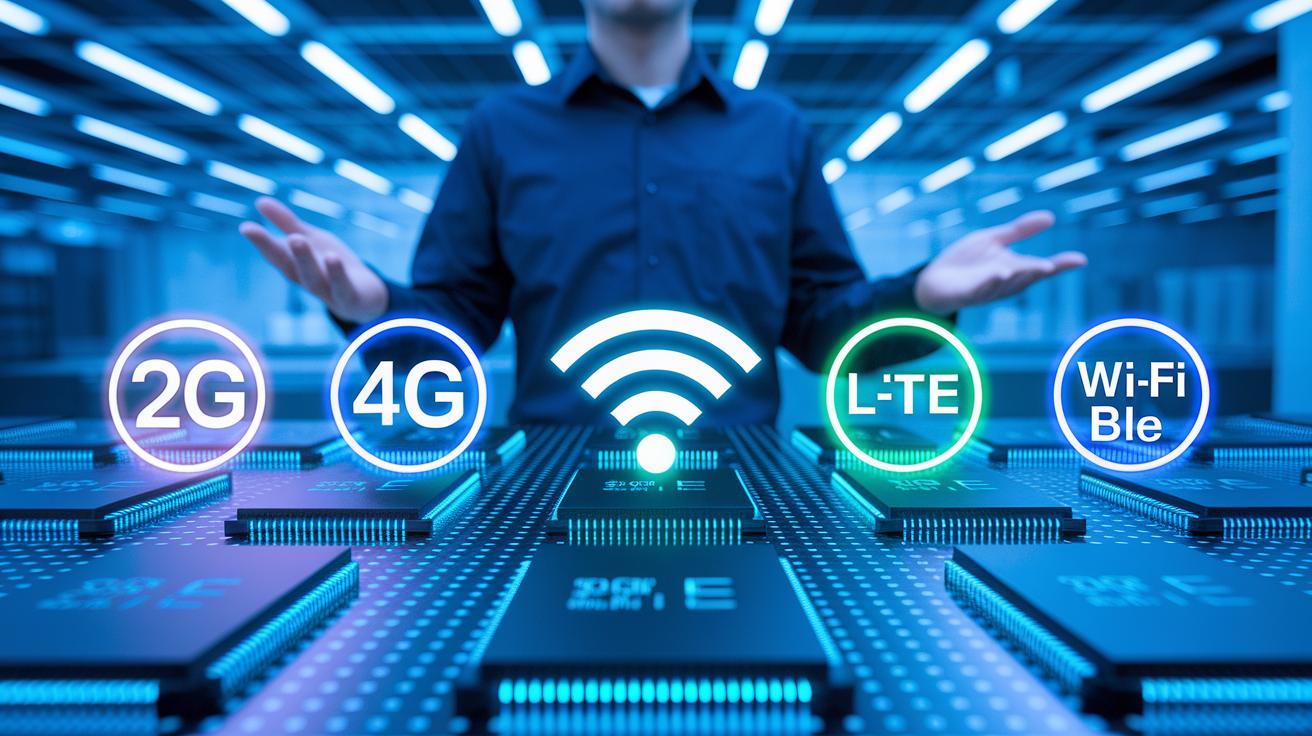
In 2024, IoT protocols got a cool upgrade, making connections faster and cheaper. Cellular IoT grew by 16% year-over-year across various standards, from 2G and 3G all the way to 5G, LTE-M, and NB-IoT. This shows that cellular networks can easily shift to meet both industrial and everyday needs. Meanwhile, Wi-Fi chipset shipments have steadied, keeping a strong 32% share for speedy, reliable links. BLE chipsets also hit a stable mark as new system-on-chips like the Nordic nRF54, Silicon Labs BG27, and TI CC23xx lowered energy use and production costs.
| IoT Protocol | Key Features |
|---|---|
| 5G/LTE-M | High bandwidth, sub-millisecond latency |
| NB-IoT | Deep indoor coverage, ultra-low power |
| Wi-Fi (2.4/5 GHz) | High data rate, moderate power |
| Bluetooth LE | Sub-milliamp draw, short range |
| Satellite IoT | Global reach, high latency |
| Legacy 2G/3G | Widespread fallback, low throughput |
Not to be left out, satellite IoT is also on the rise. With SpaceX picking up Swarm Technologies and launching 120 SpaceBEE nano satellites (with 30 more set for early 2022), it’s clear there’s a big push toward worldwide connectivity. Companies are actively reviewing communication standards and wireless protocol performance to meet specific needs, whether that’s handling huge amounts of data quickly or maintaining power efficiency over long ranges. In plain terms, these performance checks give businesses a solid roadmap for choosing the right connectivity option for their unique operations.
This benchmark isn’t just about raw numbers. It’s the kind of hands-on guidance that helps tech teams make smart, practical decisions, like picking the perfect tool from a well-stocked kit. In the world of IoT, knowing which protocol works best can really smooth your day-to-day operations.
IoT device connectivity analysis review: Superior insight

Back in 2021, a chip shortage hit companies hard, throwing supply chains into chaos and cutting into system uptime. It wasn’t just about having a strong connection, it was a wake-up call to plan for unexpected supply hiccups. Picture a busy highway suddenly gridlocked by roadblocks. Without a backup plan, even the smoothest ride can grind to a stop.
Fast forward to 2024, and the world of cellular IoT is shaped by a few key players. China Mobile leads the charge with 44% of connections and 17% of revenue. China Telecom and China Unicom follow, each topping 15% of connections, bringing in 6% and 10% of revenue respectively. Then there’s Vodafone with 5% of connections (earning 8% revenue) and AT&T at 4% of connections (with 12% revenue). This data shows a market where choices and competition push providers to keep raising the bar on reliability.
| Vendor | Connections | Revenue |
|---|---|---|
| China Mobile | 44% | 17% |
| China Telecom | 15% | 6% |
| China Unicom | 15% | 10% |
| Vodafone | 5% | 8% |
| AT&T | 4% | 12% |
Meanwhile, emerging self-healing network models are making waves. Imagine a system that automatically finds a new route for your data if one lane slows down or gets blocked. It works like a smart detour, ensuring your connection stays steady even when hiccups occur.
Energy Efficiency Metrics and Latency Optimization in IoT Connectivity
Recent BLE chipset upgrades in 2024 are a game changer. They help devices like electronic shelf labels run for years without needing a battery change. LTE-M clocks in with a delay of about 10–15 milliseconds, while NB-IoT tends to have a one-second lag. And 5G? It can hit under 1 millisecond when everything lines up perfectly. This tells us that choosing the right connectivity can make a big difference in how things perform.
Imagine this: a new BLE chipset powering a device for years, turning everyday tasks into long-term, worry-free operations. Easy, right?
Pushing AIoT processing to the edge cuts down on trips to the cloud. With processing happening closer to the device, you see less delay and better energy use since there’s no need for constant cloud chatter.
When it comes to keeping power low, it all starts with smart design. Developers trim their code to use fewer CPU cycles, which helps reduce power draw. And real-time data transmission is key for systems that need to react fast.
Think of it like tuning a high-performance sports car. By dialing in energy use and latency, you get smooth, reliable operations even when things get busy, where every millisecond and every milliwatt truly count.
Advanced Diagnostics and Tool Comparison for IoT Connectivity Analysis

The IoT Analytics October 2025 report lays out key numbers like throughput, packet loss, and latency to show how a network is performing. These figures are the heartbeat of network performance. Diagnostic tools are a must today, they catch glitches early so that operations keep humming along. They help teams spot exactly where connectivity hiccups occur and jump on fixes fast.
Big players in this field include China Mobile IoT dashboards, AT&T IoT Control Center, Eclipse IoT open-source tools, AWS IoT Core, and Azure IoT Hub. Each tool offers its own edge in monitoring and troubleshooting. Curious for more details? Check out the in-depth tech review at https://ServersFree.com?p=1861. When shopping around for these tools, you’ll want ones that smoothly integrate real-time data, are easy to use, and deliver detailed error reports.
Here are some common issues these diagnostic tools tackle:
• RF interference: They spot unexpected signal disruptions.
• Congestion: They catch overloads in data traffic and suggest fixes.
• Protocol mismatches: They flag misconfigurations that can disturb a connection.
| Diagnostic Platform | Key Feature |
|---|---|
| China Mobile IoT dashboards | Real-time network metrics |
| AT&T IoT Control Center | Integrated connectivity monitoring |
| Eclipse IoT open-source tools | Flexible troubleshooting suite |
| AWS IoT Core | Scalable cloud management |
| Azure IoT Hub | Comprehensive data analytics |
Final Words
In the action, we mapped out IoT device connectivity across global growth, protocol performance, network reliability, and energy efficiency. We broke down trends with solid examples and compared diagnostic tools that help pinpoint connection issues. This IoT device connectivity analysis review brings a hands-on look at how tech systems stay steady while powering through modern challenges. The insights here spark confidence and curiosity, lighting the path to smarter, more informed tech strategies. The future looks bright for connected devices.
FAQ
Q: What does an IoT device connectivity analysis review include?
A: The IoT device connectivity analysis review covers performance metrics across various technologies like Wi‑Fi, cellular, and Bluetooth. Reviews in PDF and from 2021 or 2022 provide clear insights into improvements and market trends.
Q: What is the projected number of IoT devices by 2025 according to Gartner?
A: The IoT device projection for 2025 is estimated at about 21.1 billion. This forecast reflects a steady increase in connectivity solutions and significant market adoption as reported by leading sources like Gartner.
Q: What is expected for the number of IoT devices by 2030?
A: The forecast for IoT devices aims for roughly 39 billion units by 2030. This projection underscores growing connectivity and enhanced network performance that drive wider use across various sectors.
Q: How many connected IoT devices are there currently?
A: Current global IoT connectivity stands at around 18.5 billion devices, demonstrating solid growth driven by emerging network technologies and continuous improvements in connectivity infrastructure.
Q: What are key IoT growth statistics?
A: IoT growth statistics show a 12% increase to 18.5 billion devices in 2024, with projections reaching over 50 billion by 2035. These trends spotlight ongoing advancements and widespread technology integration.

Tech Analysis Patterns Fuel Confident Market Moves

Ai System Innovation Analysis Explained: Engaging Insights

Crypto Tech Analysis Sparks Powerful Performance Insights
About The Author
